Regrets
(written 5 days ago) 24 no comments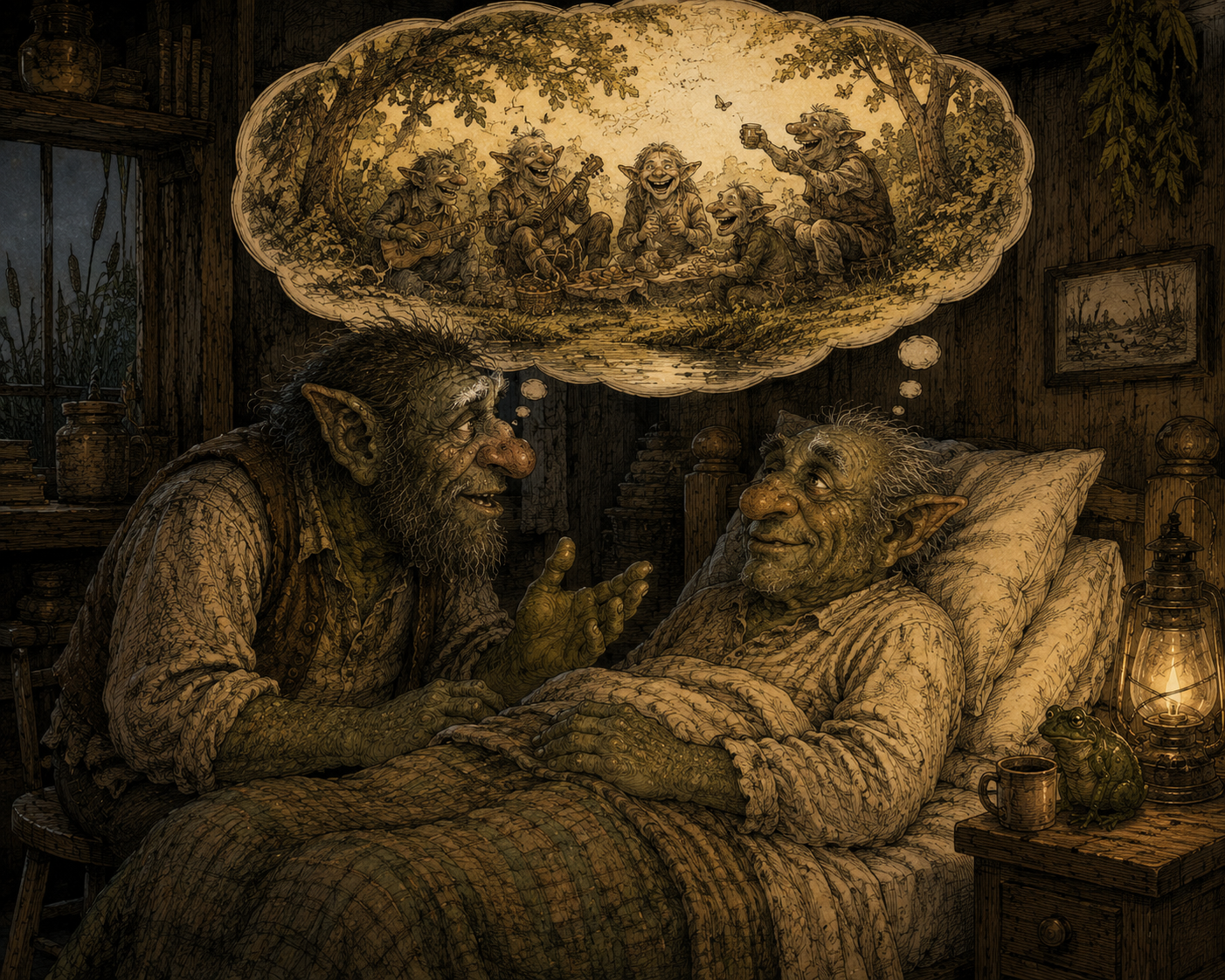
Regret requires us to imagine a life that didn't happen. Regrets ask us to construct an alternative life.
- If I had taken that job...
- If I had married that person...
- If I hadn't said that...
- If I had spent more time with them...
- If I had not eaten that second piece of cake...
We can become so consumed with the life we wish we had lived that we neglect the life we're still living. Trying too hard to avoid regret today may be one way we create regret tomorrow.
In the fifth and final book of Brandon Mull's Dragonwatch series, Return of the Dragon Slayers, there is a discussion about regret in Chapter 25, “Traveler,” that has been wandering around in my mind for a while. Seth, Clavin, and the Sphinx travel to Wyrmroost to talk to the Traveler; this is part of the conversation they have with him. Seth had lost his memories previously and had them restored.
"Yes, we are," the Traveler agreed. "How does it feel having your memories restored?"
"Painful," Seth said.
...
"Nothing aches like regret," the Traveler said with a sigh. He turned away form the pond and faces Seth.
"Now I don't know if I can trust myself," Seth said.
Regrets are inevitable. They will always happen. Life is a series of choices, and we are constantly putting our lives on a different path. Every regret creates a little alternate universe in our mind. In that universe, we took the other job, married the other person, kept our mouth shut, spent more time with someone we loved, or skipped that second piece of cake. But there is something unfair about these alternate universes: we get to imagine them without having to live in them. We know every disappointment in the life we actually chose, but none of the disappointments that would have been waiting for us on the other path.
The alternate universe can become perfect because reality never had the opportunity to ruin it.
And if we spend enough time visiting that imaginary universe, it can begin to invade the real one. We compare the people we actually love to people who exist only in our imagination. We compare the work we actually have to a career that never had a bad day. We compare our messy life to another life that never had to be lived.
Eventually we can sacrifice pieces of the only life we actually have while mourning an imagined version of the life that might have followed a different choice. We can see the fork in the road clearly, but we can't see the actual destination of the fork after the choice was made.
Since regrets are always going to be part of our life and we constantly spawn these alternate realities in our minds, let's not concentrate on how not to regret but on what to do when regret arrives. I have come up with a simple process, and by "simple" I mean easy to read, but it will not necessarily be easy to follow.
- Name the life that didn't happen. What alternate life am I imagining?
- Question the imaginary life. Am I assuming that path would have turned out better when I can't actually know that?
- Find the lesson. What is this regret telling me that I value?
- Look at the life that is happening. Is there something I can still do differently?
- Leave the other life behind. Once the regret has taught me what it can, continuing to chase an imaginary past doesn't change either path.
I think that number four is one of the most important steps. Concentrate on the now and the life you have, find the positives in it, and what can I do to influence the now to reduce the regret? Can I make the now more like the regret reality I am imagining?
I expect to have regrets. I just hope I don't keep having the same ones after they've already told me what I need to change. A regret isn't necessarily a failure. Repeating a regret after refusing to learn from it might be.
And while looking up Brandon Mull fore this rambling, I discovered his greatest regret is that he has but one life to give for Gondor.
A note from the journey:
I started this rambling thinking I was going to write about how to avoid regrets. Somewhere along the path, that changed. I don't think regrets are something we can avoid, nor am I sure we should. They can teach us what we value and show us where we might want to change. I also started out thinking of regret as simply wishing for a life that didn't happen. But that changed too. The other path at the fork was real; I could have taken it. What isn't real is the destination I have imagined at the end of that path. I don't know where it would have taken me. I think the important thing for me now is to learn what I can from the road. I didn't take it without allowing my imagined version of it to keep me from walking the road I'm actually on.
Bibliography
Mull, Brandon. Return of the Dragon Slayers. Dragonwatch 5. Shadow Mountain, 2021.
Voices from the swamp
Reader Responses
Thoughtful disagreement is welcome. Harpies, advertisements, and personal attacks will be left outside the marsh.
The frogs are listening, but nobody has spoken yet.
Respond to this rambling
Before feeding the frogs, read the swamp rules
A Word Before You Feed the Frogs
This is Trowlen's swamp, but thoughtful visitors are welcome to pull up a reasonably dry log and disagree with me. You do not need to flatter the troll. You do need to behave like a human being who remembers that another human being is reading.
The Swamp Rules
What the Swamp Saves
When you submit a comment, the site saves the display name, email address, optional website URL, comment text, the rambling you responded to, the submission time, and your acceptance of this policy. The comment receives a random internal identifier and remains private while waiting for moderation.
Your email address is used to identify and review the submission and to make direct contact possible if that becomes necessary. It is not displayed with an approved comment, sold, rented, used for advertising, or added to a mailing list.
If you provide a website URL, it is saved with the private comment record. It is also added to a separate private text file that Trowlen uses as a personal list of websites to visit, read, and possibly respond to. That URL list is independent of the comment archive. Removing a comment does not automatically remove its URL from the private list.
Approved comments publicly display the submitted display name, comment text, submission date, and optional website link. If Trowlen writes a response while approving the comment, that response is displayed with it. Reader website links are marked so search engines know they are user-submitted links.
Disapproved comments are moved into a private archive instead of being published. Pending, approved, and disapproved records are currently retained indefinitely. This allows Trowlen to reconsider an old decision, preserve the history of a conversation, or use a private submission as a future point of reflection. Archived folders may occasionally be removed manually.
The site uses a hidden anti-spam field, submission timing and rate checks, a session-bound security token, and Google reCAPTCHA. reCAPTCHA processes technical information under Google's own privacy policy and terms. The web server may also retain ordinary access and security logs. The comment record itself does not intentionally store your IP address.
The saved information is used only to receive, moderate, publish, answer, secure, and maintain comments; to prevent abuse; and to maintain the private website list described above. It is not sold or shared for behavioral advertising.
If you want a published or privately retained comment removed, use the site's contact page and provide enough information to identify it. I may need to confirm that the request came from the same email address used for the submission.
By checking the policy box and submitting a comment, you confirm that you have read and accepted these rules. In shorter Trowlen terms: disagree freely, speak honestly, leave the harpy costume at home, and remember that the frogs are listening.